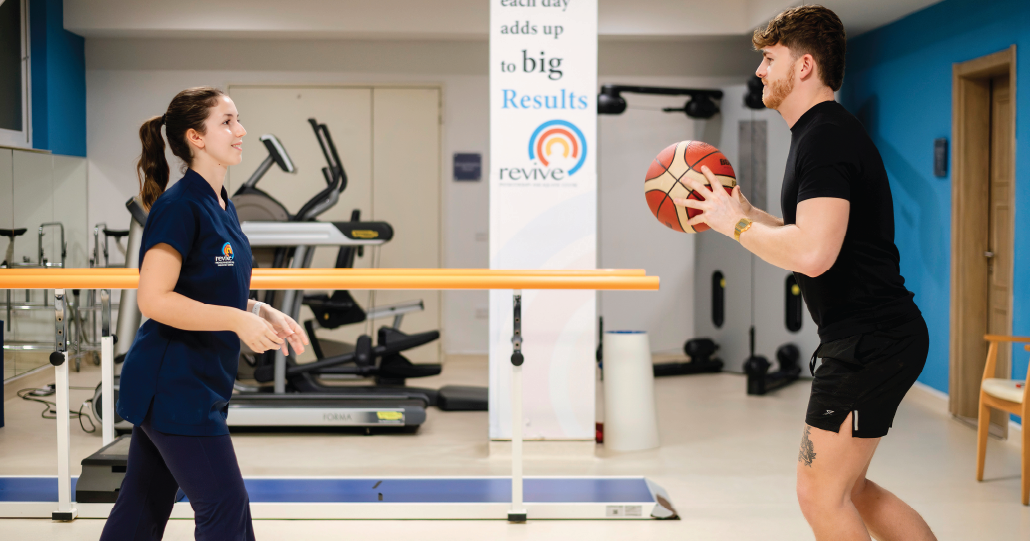
Avoiding Setbacks After Surgery or Injury: The Importance of Guided Rehabilitation
After surgery or a significant injury, it is natural to want to get back to normal as quickly as possible. But rehabilitation is one area where trying to rush things can sometimes work against you.
Your body needs time to heal, but it also needs the right amount of movement and loading to rebuild strength, mobility and confidence. Too much activity too soon may aggravate pain or swelling, while too little movement can contribute to stiffness, weakness and loss of physical function.
This is where guided rehabilitation comes in. Rather than simply giving you a list of exercises and sending you home, a physiotherapist can assess where you are starting from, establish realistic goals and gradually adjust your programme as your recovery progresses. This person-centred approach is consistent with how the World Health Organization (WHO) defines rehabilitation: interventions should be adapted to the individual, their goals and their changing needs.
Why Guided Rehabilitation Matters
Rehabilitation is rarely a perfectly straight line. You may have days when movement feels easier and others when you feel more tired, stiff or sore. But with consistency and the right approach, you can expect definite improvements over time.
1. It helps you move at the right time
One of the biggest questions after surgery is often: How much should I actually be doing? The answer depends on the procedure, your health, the tissues involved and your surgeon’s instructions. For some operations, getting moving early is actively encouraged. For example, many experts recommend rehabilitation on the day of surgery where possible, and no later than 24 hours after elective hip, knee or shoulder replacement, including appropriate mobilisation or walking. That doesn’t mean pushing through pain or ignoring surgical restrictions. It means introducing the right movement at the right stage.
2. It prevents the “doing too much” trap
It is tempting to think that more exercise automatically means faster recovery. It doesn’t. Rehabilitation works through progressive loading: gradually challenging muscles, joints and other tissues as they become capable of handling more. A physiotherapist can monitor factors such as pain, swelling, range of motion, strength, movement quality and fatigue, then increase or reduce the workload accordingly. That might mean progressing from gentle muscle activation to bodyweight exercises, resistance bands and eventually weights or more demanding functional movements.
3. It also prevents doing too little
The opposite problem is prolonged inactivity. Protecting a surgical area is important, but extended inactivity can lead to stiffness, muscle weakness and reduced confidence with movement. This is why rehabilitation is about finding the middle ground between protection and progression. Early mobility, when medically appropriate, is an established part of recovery pathways, particularly following joint replacement.
4. It gives you a programme that changes as you do
Your rehabilitation programme shouldn’t remain exactly the same from week one to week eight. As your movement improves, your physiotherapist can introduce new challenges. A simple sit-to-stand might eventually become a squat; supported walking might progress to stairs; basic strengthening might develop into more demanding resistance exercises. WHO specifically describes rehabilitation as an ongoing process involving assessment, goal-setting, intervention and evaluation rather than a fixed treatment plan.
5. It keeps recovery focused on real life
The ultimate goal isn’t simply to achieve a particular range of motion or complete ten repetitions of an exercise. It is being able to walk comfortably, climb stairs, return to work, lift and carry things, get back to hobbies or eventually return to sport, depending on your circumstances. That is why good rehabilitation looks beyond the original injury or operation and asks what you actually need your body to do again. WHO describes rehabilitation in similarly functional terms: helping people regain, maintain or improve their ability to participate in everyday life.
Getting Back on Track with Revive in Malta
At Revive Physio & Aquatic Therapy Centre in Naxxar, rehabilitation is built around that step-by-step approach. Our physiotherapists assess your individual needs before developing and progressing a programme designed around your recovery, whether you’re coming back from surgery, injury or another condition affecting your mobility and strength.
As your abilities change, so does the programme, with access to a fully equipped physiotherapy centre and hydrotherapy pool where appropriate. You don’t have to work out what recovery should look like on your own. The Revive team can help you take the next step, then the one after that, until better movement becomes part of everyday life.
If you are recovering from a major operation, ask about our post-operative rehabilitation programme, run in collaboration with Simblija Care Home next door to Revive, where patients can also stay while they recover. And when you are ready to begin, you can book a physiotherapy session online in minutes.